Zentai Art Project
  • Home
  • Zentai Art Project
    • ゼンタイアートプロジェクト
    • What's new
    • Statement
    • About
    • Zentai Videos >
      • Favorite videos
      • Composed music videos
      • Music performance videos
      • Performance art videos
      • Group performance art videos
      • Zentai Walk videos
      • Zentai Art Videos 37- 41 (India)
      • Zentai Art Videos 42-48 (Tohoku)
      • Zentai Art Videos 49-55 (Singapore)
      • Zentai Art Videos 56-61 (Thailand)
      • Zentai Art Videos 62-68
      • Zentai Art Videos 69-82
      • Zentai Art Videos 83-99
      • Zentai Art Videos 100-
    • Photographs and Images >
      • Zentai Images
      • Zentai Photos 1
      • Zentai Photos 2
      • Zentai Photos 3
      • Zentai Photos 4
    • Zentai 采访
    • Event >
      • ゼンタイで金華山
      • Zentai Walk in Aomori
      • 关于岐阜的记忆
      • ゼンタイで柳ヶ瀬商店街
      • ゼンタイで商店街
      • Yanagase
      • 女神の戦士プロジェクト
      • 女神の戦士プロジェクト柳ヶ瀬
      • Chronicle Erotica
      • Wave
      • UFO concert 2
      • zentai daince
      • UFO Concert
      • Zentai Erotica
      • Red shadow
      • 10 minutes of pleasure, 10 days of pain
      • Zentai Butoh
      • ArtScience Late
      • PINK
      • Why then should we worry
      • Why then should we worry?
      • Balls
      • Eagle Eye
      • Caridad
    • Book >
      • 洗脳1
    • ゼロイズム >
      • ゼロイズム60
      • ゼロイズム比較
      • ゼロイズム消費社会
      • ゼロイズム他の思想との相違点
      • ゼロイズム無くなる価値観
      • ゼロイズムとは何か
      • ゼロイズムの話
      • What is Zeroism
      • 零主义是什么
    • Identity >
      • ゼンタイとは
      • What is idea of Zentai
    • Media
    • Links
  • Shop
    • R18 card
    • Zentai color
  • about me
    • My Music >
      • River Kalkusis >
        • Photos of Benaras Dogs
      • 528Hz
      • Hypnotyzing Music
      • electronika
      • Live
      • Bhajan
      • Art festival
      • Okinawa
      • Some music 2010
      • Some music 2009
      • Healing Music Theory
      • MP3
    • My Secret Diary >
      • Transparent zentai in Bathroom
      • 最好吃
      • 浅虫 >
        • About Asamushi
        • Asamushi Super Arts
  • Contact me

 ゼンタイアートプロジェクト

Picture

About Zentai Art

What is idea of Zentai?

  1. Identity and Self-Exploration: Wearing a zentai suit can provide a sense of anonymity by concealing one's physical appearance and individual characteristics. This anonymity can prompt individuals to question the nature of identity and explore aspects of their personality that may be hidden or suppressed in everyday life.
  2. Freedom and Liberation: Zentai philosophy can embrace the idea that donning a full-body suit allows individuals to transcend societal expectations and norms, thereby experiencing a sense of liberation. It can be seen as a way to break free from preconceived notions and explore alternative forms of self-expression.
  3. Unity and Collective Experience: Wearing zentai suits can create a sense of unity and equality among participants, as individual features and attributes are obscured. This can foster a sense of shared experience, emphasizing the commonalities between people rather than their differences.
  4. Embodiment and Non-Verbal Communication: Zentai philosophy can involve exploring the relationship between the body and the mind, focusing on non-verbal communication and expression. The emphasis is placed on physical movements, gestures, and interactions, challenging the primacy of verbal language as a means of communication. read more 

ゼンタイとは?

  1. アイデンティティと自己探求:ゼンタイスーツを着用することによって、日常のアイデンティティや身体的な形態からの切り離しを感じることができます。この匿名性は、アイデンティティの本質を問い、自己の隠れた側面や抑制された要素を探求するきっかけとなるかもしれません。
  2. 自由と解放:ゼンタイ哲学では、フルボディスーツを着用することで、社会の期待や規範から自由になり、解放感を体験することができるという考え方があります。社会的な期待やジャッジメントから解放され、より本質的な自己表現を追求する手段としてゼンタイスーツを活用することができます。
  3. 統一と共同体の経験:ゼンタイスーツを着用することによって、参加者同士の統一感や平等性が生まれます。個々の特徴や属性が隠れることで、共同体の経験が強調され、個人の違いよりも共通点を重視することができます。
  4. 具体的で言葉によらないコミュニケーション:ゼンタイ哲学では、身体と心の関係を探求し、言葉に頼らないコミュニケーションと表現に焦点を当てることがあります。身体の動きやジェスチャー、相互作用を重視することで、言葉以外のコミュニケーション手段の重要性に挑戦します。もっと読む

私の作品は、身体、音、行為、そして集団の存在を通して、人間のアイデンティティとは何かを探る試みです。音楽、パフォーマンス、映像、インスタレーションなど複数のメディアを横断しながら、人間の存在や社会の中で形成される個人の境界について問い続けています。私の関心は、社会によって作られるアイデンティティと、人間のより根源的な存在との間にある距離を体験的に可視化することにあります。
私がゼンタイと出会ったのは、自分の音楽に映像を重ねようとしたときのことでした。ゼンタイをまとった身体が映像の中に現れた瞬間、音楽が初めて完成したと感じました。音には聴こえる波動だけでなく、見える波動があります。音が空間の中で振動として広がるように、身体の動きもまた視覚的な波動として現れます。ゼンタイは、その視覚的な波動を身体に宿す装置として、私の前に現れました。
2010年から私は「Zentai(全身タイツ)」という衣装を用いた作品を制作しています。Zentaiは身体全体を覆うことで、顔や肌の色、年齢、社会的立場といった個人を識別する要素を取り除きます。個人の特徴が消えることで、そこに現れるのは特定の人物ではなく、身体そのものの動きやエネルギー、そして集団としての存在です。私にとってZentaiは単なるコスチュームではなく、アイデンティティを一度解体し、人間をより根源的な存在として捉え直すための装置です。
この考えの背景には、長年にわたる旅の経験があります。私は7年以上にわたり、一つの国にアパートを借りて数ヶ月過ごしては次の国へ移るという生活を続けてきました。新しい国に到着するたびに、その土地の人々のジェスチャーや思考、行動のリズムが自分の中に少しずつ染み込み、自分自身が変化していくのを感じました。それを何年も繰り返すうちに、変わり続ける自分の奥に、どこへ行っても動かない何かがあることに気づきました。それは概念として理解したものではなく、身体感覚として胸の奥に存在している感覚でした。この経験が、私の表現の出発点となっています。
私にとってアイデンティティとは、環境によって形成されるものです。肌の色、言語、社会的役割、他者からの視線——それらが重なり合うことで「私」という輪郭が作られていきます。しかしそれらは必ずしも人間の本質ではありません。自分ではないものを一度解体し、その奥にあるより根源的な存在に触れること。それが私の作品における中心的なテーマです。
Zentaiによって匿名化された身体は、個人の境界を曖昧にし、他者や環境との関係を新しく感じるための状態を作り出します。複数の身体が同じ姿で動くとき、そこには個人を超えた一つの流れやエネルギーのようなものが現れます。身体の違いが消えることで、観客は個々の人物ではなく、空間の中で生まれる動きやリズム、そして身体同士の関係性に意識を向けるようになります。その瞬間、私たちは自分自身を個人としてではなく、より大きな存在の一部として体験することができます。
私のパフォーマンスは、そのような体験を共有する場を作ることを目的としています。Zentaiを着た身体は、個人のアイデンティティから一時的に離れ、集団としての身体の状態を生み出します。この匿名化された身体は、同時に普遍的な身体でもあります。そこでは年齢や国籍、文化の違いが視覚的に弱まり、人々はより直接的に身体の存在を感じることになります。
この考えは、私の活動の社会的な側面にもつながっています。私は作品制作と並行して、人々が参加できる場を作る活動も行っています。Zentaiを着た集団によるパフォーマンスや「Zentai Walk」、そして国際的なアーティストが集まるフェスティバルや滞在制作プログラムを通して、異なる文化や背景を持つ人々が同じ身体の状態を共有する機会を作ってきました。そこでは言語や文化の違いを越えて、身体の動きや共に存在する時間そのものがコミュニケーションとなります。
私にとってアートとは、完成した作品だけを指すものではありません。人々が出会い、関係を築き、共に経験を共有する時間そのものもまた芸術の一部です。パフォーマンス、音楽、映像、そしてコミュニティの形成は、すべて同じ探求の異なる側面です。それらを通して私は、個人という枠組みを越えた存在のあり方や、人と人、人と環境との新しい関係を探り続けています。
私の実践は、身体の匿名化を通して個人のアイデンティティを一度手放し、より普遍的な人間の状態を体験するための試みです。そこでは私たちは「誰か」である前に、ただ存在する身体として他者と共にいます。そのシンプルな状態の中に、人間が本来持っているつながりやエネルギーが現れるのではないかと考えています。私の作品は、そのような経験を生み出す場を作り続ける試みです。

My artistic practice explores the question of human identity through the body, sound, action, and collective presence. Working across performance, music, video, and installation, I investigate how individual identity is constructed within social structures and how it might be temporarily dismantled in order to reveal a more fundamental human condition.
My encounter with Zentai began when I attempted to combine my music with visual imagery. When a body wearing Zentai appeared within the video, I felt that the music had finally become complete. Sound does not exist only as something we hear; it also exists as vibration that moves through space. I began to think of the body as a visual vibration—an extension of sound into space. Zentai became the medium through which this invisible vibration could take a visible form.
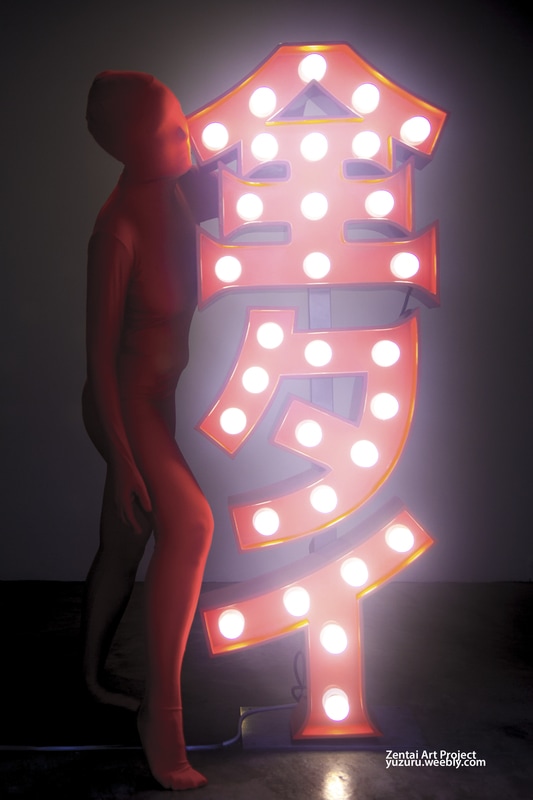
Since 2010, Zentai (a full-body suit that covers the entire body including the face) has been a central element of my work. By concealing the face and skin, Zentai removes many of the visual markers that allow us to immediately categorize a person: age, gender, race, and social status. When these markers disappear, the viewer no longer sees a specific individual. Instead, what emerges is the movement of the body itself, the flow of energy within space, and the presence of the collective body.
For me, Zentai is not simply a costume but a conceptual device that dismantles identity. By erasing recognizable personal features, it shifts perception away from the individual and toward the body as a universal form. When multiple Zentai bodies move together, the distinction between individuals begins to dissolve. The bodies are perceived less as separate persons and more as a single field of movement or energy. In this way, the work creates a situation in which viewers experience the body not as an individual identity but as part of a larger continuum.
The origins of this thinking lie in my personal experience of travel. For more than seven years, I lived a nomadic life, staying in different countries for several months at a time before moving on to the next place. Each time I arrived in a new culture, I noticed that the gestures, rhythms of daily life, and ways of thinking around me gradually began to influence my own behavior. My sense of self continuously shifted as I adapted to each environment.
After repeating this experience many times, I began to notice something else: beneath the constantly changing layers of identity, there seemed to be something within me that did not move at all. This realization did not appear as an intellectual concept but rather as a physical sensation in my chest. It was a quiet awareness of something stable within the fluidity of identity. This experience became the driving force behind my artistic practice.
Identity, in my view, is largely constructed by environment. Skin color, language, social roles, and the gaze of others gradually shape the outline of what we call “the self.” Yet these elements are not necessarily our essence. By temporarily dismantling the identities that surround us, it becomes possible to sense a deeper layer of existence. My work attempts to create conditions in which this process can be experienced rather than simply understood intellectually.
The anonymized body created through Zentai blurs the boundary between the individual and the collective. When multiple bodies move together in identical form, a new kind of perception emerges. Viewers begin to focus not on personal identity but on patterns of movement, spatial relationships, and the subtle rhythms that arise between bodies. What becomes visible is not the story of an individual performer but the dynamic field created by the interaction of bodies in space.
In these moments, participants and viewers alike may experience themselves differently. Instead of perceiving the body as a personal identity, it becomes possible to sense the body as part of a larger system of movement and energy. The performance space becomes a place where the separation between self and others becomes temporarily porous.
This idea extends beyond individual artworks into the broader structure of my practice. I create not only performances but also situations in which people can experience this shift in perception together. Through collective performances, Zentai Walks, international festivals, and artist residency programs, I invite participants from diverse cultural backgrounds to inhabit the same anonymous physical condition. In these environments, communication emerges not through language but through shared presence, movement, and time.
For me, art is not limited to the production of finished objects. It also exists in the encounters and relationships that emerge through shared experiences. Performance, sound, video, and community formation are interconnected aspects of the same inquiry. Together they create spaces in which individuals can step outside their habitual identities and experience themselves in relation to others and to the environment in new ways.
At its core, my practice attempts to momentarily suspend the structures that define who we are. When identity is temporarily released, even for a brief moment, another possibility of being can appear. In that moment, we are not defined by social roles or personal histories but simply by our presence as bodies sharing space and time with others.
Within this simplicity, I believe it is possible to sense a fundamental connection that exists beneath the many identities we carry. My work seeks to create situations in which this connection can be experienced—moments when the body becomes not a symbol of individuality but a gateway to a more universal human presence.

Picture
ゼンタイウォーク in 青森

10月13日(月・祝) 11:00 本町公園集合
​13:00終了

カラフルな全身タイツ「ゼンタイ」を着て、みんなで柳町通りを歩きます!
子供から大人まで誰でも参加できる、ワクワクするアート体験です。

いつも見慣れた街が、ゼンタイを通して非日常の風景に変わる不思議な時間。
一人で参加しても、ゼンタイを着た瞬間に自然とみんなと一体感を感じられ、思わず笑顔になれる——そんなとても楽しい体験です。

ゼンタイは参加者のサイズに合わせて無料でレンタルしますので、手ぶらでOK!
初めての方でも安心してご参加いただけます。

友達や家族と一緒に、もちろん一人でも大歓迎。
一緒に街を彩り、非日常のひとときを楽しみましょう!
もっと詳しく

ロープーウェイで金華山に登ってアートで天下を取ろう
全身タイツでいく金華山
2025/11/02(日) 12:00 ~ 15:00
ゼンタイ無料進呈
金華山ロープーウェイ往復1300円、岐阜城入場料200円(ゼンタイ衣装付き)
持ち物:動きやすい靴、冒険心

― 全身タイツで金華山を攻め上ろう! ―
天下統一を夢見た織田信長の城、岐阜城。
その金華山を全身タイツ(ゼンタイ)で登ります!
ゼンタイで歴史の舞台に立ち、
カラフルな身体で岐阜城をアートの力で蘇らせよう。
参加者には無料でゼンタイ衣装をプレゼント!
誰でも武将になれる、誰でもアートの一部になれる、
「みんなゼンタイ化計画」始動!
信長の「天下布武」から、ゼンタイの「天下アート」へ!
岐阜城をカラフルに染め、アートで天下を取りに行こう!

集合場所
​鵜飼観覧船待合所前〒500-8005 岐阜県岐阜市上材木町425-7

雨天決行
もっと詳しく

Picture

ゼロイズムとは?


ゼロイズム(Zeroism)は、「無意味を肯定する」ことを中心に据えた、新しいアートムーブメントおよび哲学的思考の概念です。
これは、従来のアートや創造の枠組みを超え、直感・無意識・偶発性を重視することで、既存の価値観から解放されることを目的としています。

ゼロイズムは、以下のような特徴を持ちます:
​
  • 意味やメッセージを持たない表現
  • 完成や未完成の概念を持たない
  • 作品の所有や市場価値を重視しない
  • 理論や知識ではなく、感覚に基づく創作
  • 直感的な創造を優先し、意図的なコントロールを排除する
  • アートと日常の境界をなくし、生きることそのものを表現とする
Picture


ゼロイズムの背景と思想的基盤

ゼロイズムは、東洋思想における「無為自然」(老荘思想)に近い価値観を持っています。孔子の思想が「秩序と倫理」を重視するのに対し、老荘思想は「ありのままの流れに従う」ことを重視します。ゼロイズムは、まさにこの「流れに従う」創作方法を採用し、努力や計画よりも、偶発的な創造を重視します。
また、スーパーフラット(Superflat)などの現代アート運動が「ポップカルチャーや社会構造を批評的に描く」のに対し、ゼロイズムは「批評そのものを手放す」ことに特徴があります。これは、現代アートが持つ「知的アプローチ」に対するアンチテーゼとして機能します。

ゼロイズムの社会的影響

ゼロイズムは単なるアートの概念にとどまらず、社会全体の価値観の変化にも影響を与えます。特に、次のような社会的変革を促す可能性があります:
​
  • 競争社会から、共創と協調の社会へ
  • 努力と成果の価値観から、存在そのものの価値へ
  • 論理的思考から、直感的・感覚的な生き方へ
  • 物質的価値から、エネルギーや波動の価値へ
  • 評価や承認を求める生き方から、自己充足的な生き方へ


ゼロイズムの本質

ゼロイズムは、「考えるより感じる」ことを重視し、アートだけでなく生き方そのものを変革するムーブメントです。それは、個人が恐れやコントロールを手放し、より自由に、より直感的に存在するための手段であり、物質主義や競争社会からの解放を意味します。
ゼロイズムが広まることで、社会は「何かを成すこと」よりも「ただ在ること」に価値を見出すようになり、結果として、より自由で調和のとれた世界へと進化することが期待されます。
​


Picture


​I organize Z
entai Art Festival


We have various dance performances, exhibitions, performance art and zentai walk in Singapore and also to other Aisan countries.
​

日本でゼンタイ売ってます


Zentai Walk
 
I create performance on ‘Zentai Art’. Zentai Art takes inspiration from ‘Zentai’ (full body tights).
 
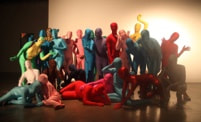
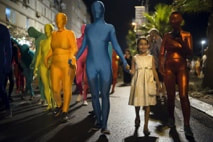
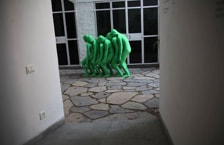
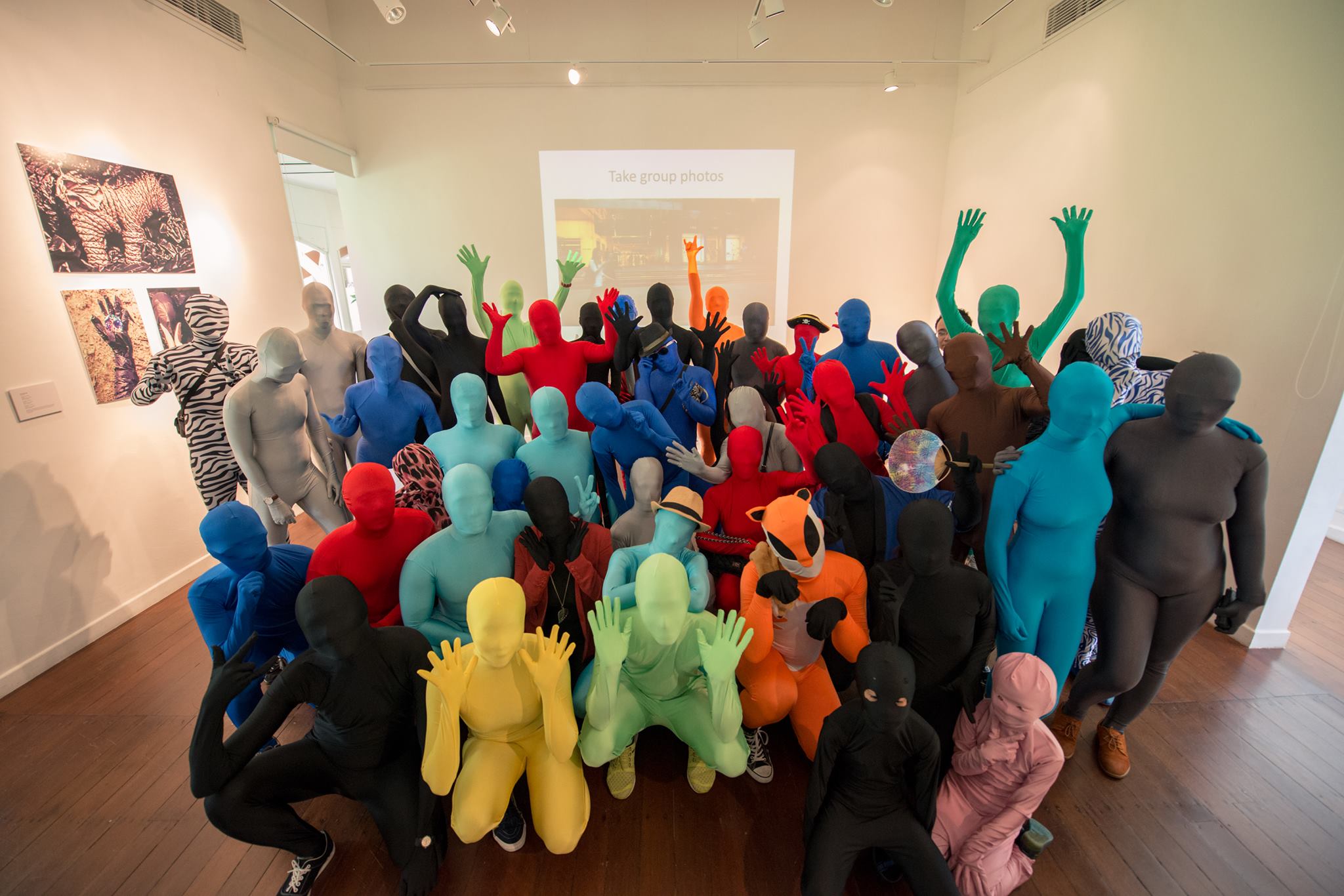
Essentially, Zentai Walk is the capstone of my interactive zentai art. Using the zentai medium, we meld race, religion, sex, age, role in the society and dress codes. We obscure the 5 senses that are a part of our sentient being.
When these artifices are melded and obscured, prejudice fades. We become one and we become more, with less. 
 
With the uniquely interactive nature of my Zentai art, I draw the audience not only into the performance, but into the sensations and philosophy of unity without creed and bias. 
The walks while encased in zentai amplify this shared unity. 
 
My zentai art kindles different reactions depending on the country or region we perform in. 
 
In below chart, you will find an evolutionary timeline of zentai art performances throughout the world. I have distilled into a few words what the audience and participants experienced in each performance. 
 
 
Zentai Walk
Video link:    https://youtu.be/Iy4mV8_VuFE
​
ゼンタイウォークとは

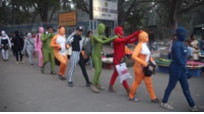
みんなでゼンタイを着て、街を歩く。ただそれだけのことが、世界20カ国、40回以上の実践を通じて、その都度まったく異なる何かを生み出してきた。参加者は10人から50人。アーティストでなくていい。ゼンタイを着ることさえできれば、誰でもその一員になれる。ゼンタイウォークは観客参加型のパフォーマンスであり、同時に一種の社会実験であり、哲学の実践でもある。

街を映す鏡

ゼンタイウォークが最も興味深い点は、それが「メッセージを持たない」にもかかわらず、歩く先々でその土地の本質を映し出すことだ。顔のない身体の集団が街に現れるだけで、その社会が何を恐れ、何を欲しているかが、人々の反応として浮かび上がる。ゼンタイは透明なフィルターではなく、むしろ鏡だ。そこに映るのは、いつもその土地そのものだった。
ロシアでは、街頭での集団行動はそれだけで政治的緊張を孕む。しかしゼンタイを着て歩くことで、明確なメッセージを持たない「ポジティブなプロテスト」が生まれた。行動の制限から解放されていく感覚が、政治的文脈を迂回しながら参加者の中に広がっていった。
イスラエルでは、ユダヤ人参加者がゼンタイを着ることで逆に人種が判別できなくなり、同胞から出自を疑われ、銃を突きつけられた。ゼンタイが覆い隠したはずの「アイデンティティ」が、その社会においてどれほど根深く、どれほど緊張を帯びているかを、銃口という形で突きつけてきた。
ミャンマーでは屋外での実施が困難なため、現地の人々のサポートによって室内で行われた。しかしそこで浮上したのは、ミャンマー社会のもう一つの核心——仏教への敬意というタブー——との接触だった。ゼンタイという異物が、意図せず聖域の輪郭を照らし出した。
ベトナムでは、ベトナム人が野外でパフォーマンスを行うことが厳しく制限されている。しかしゼンタイを着て互いに英語を話すことで、参加者たちは一時的に「ベトナム人であること」を消すことができた。そうして初めて、野外パフォーマンスが実現した。ゼンタイは国籍という制限を、身体と言語の両方で脱ぎ捨てる装置になった。
タイでは事情が異なった。ゼンタイを愛好する人は潜在的に多くいたが、それぞれが孤立した状態で存在していた。アートイベントという枠組みが、初めてその人たちを一堂に集める場となった。地下に潜っていたカルチャーが、ゼンタイウォークによって地上へと押し上げられた瞬間だった。

感覚の変容—--

「使わなかった感覚が目覚める」ゼンタイを着ると、視界が鈍くなる。聴覚も鈍くなる。普段、人間がいかに「目」と「耳」に頼って他者を認識しているか——顔を見て、声を聞いて、名前を確かめて、職業を確認して——そのことに、着た瞬間に気づかされる。
その代わり、今まで眠っていた感覚が目覚める。肌で感じる体温、気配、重心の移動。他者を「情報」として処理するのではなく、その人の「存在」そのものとして感じ取るようになる。名前も職業も年齢も知らないまま、その人が今ここにいるという事実だけで知り合える。
これはちょうど、砂場で知らない子供と何の抵抗もなく一緒に遊んだ幼い頃の感覚に似ている。あの頃は、相手がどんな家の子か、どんな学校に通っているかを確認してから遊び始めたりしなかった。ゼンタイウォークは、大人になる過程で身につけてしまった「ラベルによる他者認識」を一時的に剥ぎ取り、あの無邪気な感覚へと参加者を連れ戻す。

個から「一つの大きな存在」へ

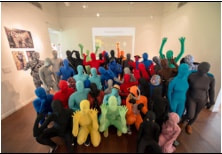
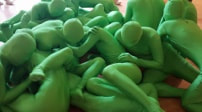
ゼンタイを着た人の集団を見ると、不思議なことが起きる。20人が集まっているのに、20という数が消える。バラバラな個人ではなく、ひとつの大きなエネルギーとして目に映る。
これは視覚的な現象に留まらない。着ている側も同じように感じる。それぞれが抱えてきた多くの役割——国籍、職業、年齢、家族の中での立場——がぼんやりし、シンプルな存在に還元されていく。その「シンプルさ」の地点で、参加者の間に自然な一体感が生まれる。
ゼンタイが問いかけているのはここだ。「私」と「あなた」を分けているのは何か。それは外見であり、役割であり、アイデンティティだ。しかしそれらを一枚ずつ剥いでいったとき、残るものは何か。ゼンタイウォークはその問いを、言葉ではなく身体で体験させる。

街に咲く、一時的な花

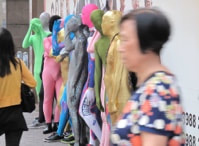
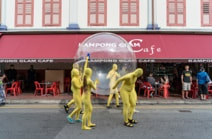
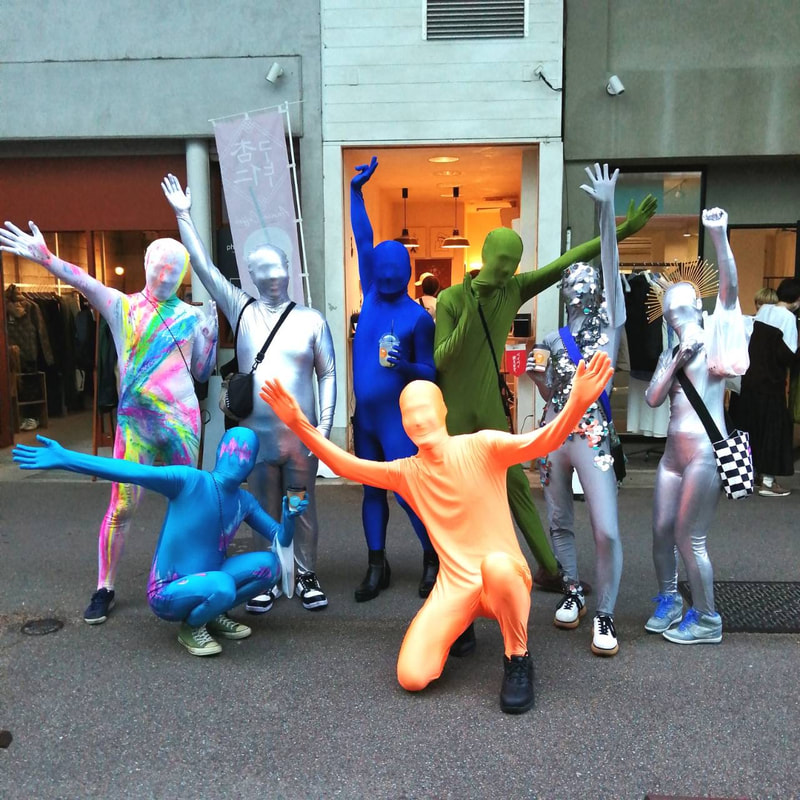
哲学的な問いを内包しながらも、ゼンタイウォークは同時にひどく華やかでもある。カラフルなゼンタイを着た人々が街を歩くとき、その光景はまるで街角に突然花が咲いたようだ。見慣れた道が、一瞬だけ違う場所になる。通りすがりの人が立ち止まり、笑い、写真を撮り、時に一緒に歩き始める。
その「一時性」も哲学のひとつだ。ゼンタイウォークは街を変えようとしない。何かを残そうともしない。ただ、その瞬間だけ別の現実を出現させ、消えていく。咲いて、散る。それで十分だ。

哲学の核心

世界はますます表面を重視するようになっている。外見、国籍、宗教、職業——人間はそうしたラベルで互いを分類し、その分類が対立を生む。ゼンタイウォークは、その分類を物理的に覆い隠すことで、分類する前の地点に立ち返ることを試みる。
​
私たちは本来、分離した個体ではない。アイデンティティという「違い」を作り出す装置を外したとき、そこには根っこで繋がっているシンプルな存在がいる。ゼンタイウォークが20カ国40回以上の実践を経てたどり着いたのは、この一点だ—--シンプルな状態に戻ることが、人を繋ぐ。

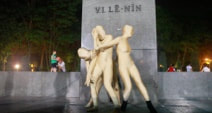
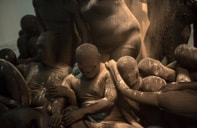
Bangladesh: Live sculptures
Korea: Fashion
Russia: Positive protest
Philippine: Social level
Indonesia: Shared Happiness
Malaysia: Muslim society
Thailand: The shift
Hong Kong: Flash Mob
India: Vibe
China: Tranquillity
Vietnam: Break through
Myanmar: Suspicion
Israel: Fear and aggression
Singapore: Break through
Singapore: Relief
Music

I compose original music. Below are some of my compositions
Picture
Performance Art 
Sound Art Performance
Powered by Create your own unique website with customizable templates.